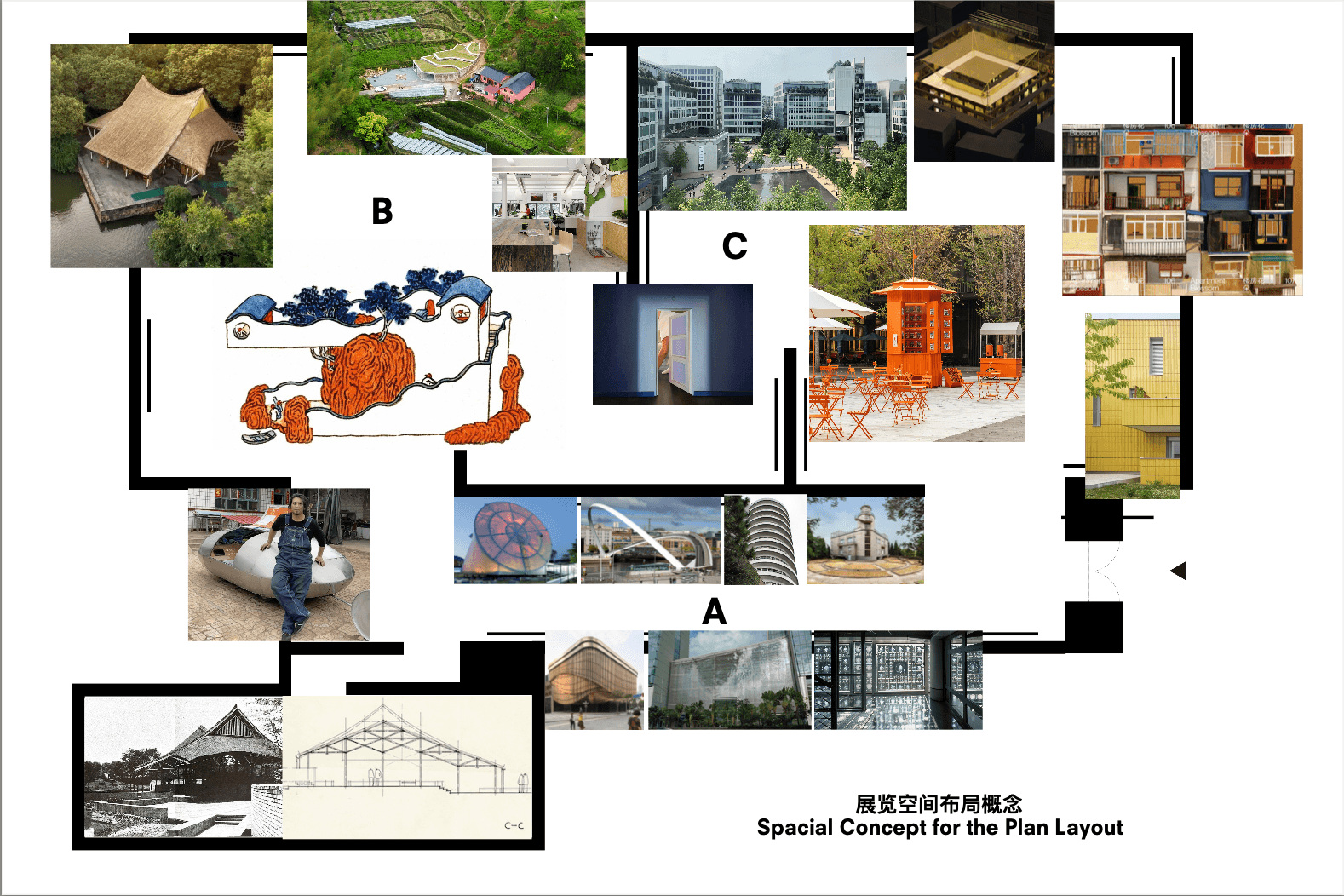
An architect and a curator working on the same exhibition bring two different sets of views. One starts from how things are built; the other from how things are perceived. My collaboration with architect Qian Shiyun is founded on that difference — and because of it, our interpretation of "dynamic architecture" was never intended to speak only to an architecture audience.
We began with language. In Greek, "dynamic" traces back to _dunamis_ — force, energy. In Chinese, the term we used, 活性, is borrowed from chemistry: it describes reactivity, and in biochemical terms, metabolism — the defining marker of something being alive. The metaphors point in different directions across the two languages, but they converge on the same idea: a building is not still. From there we established three interpretive dimensions — physical dynamism (form that moves), ecological dynamism (symbiosis with environment), and humanistic dynamism (self-renewal through time and shifting social structures) — and used them as the framework for both selection and narrative. This opened the field wide: a residential tower whose floors rotate independently, a tea pavilion built from bamboo, urban housing transformed across generations. The exhibition brought together international precedents in functional kinetic architecture, contemporary Chinese practice, and six art projects that use architecture as their medium.
For the art projects, our criterion was internal resonance, not surface illustration. One of them centred on the newsstand. During the wave of state-enterprise restructuring in 1990s China, newsstands became survival posts for many laid-off workers — small structures carrying a chapter of urban history and real individual lives. Today they have vanished from the streets of most Chinese cities. We proposed reconstructing one inside the exhibition — not as nostalgia, but to make a once-ubiquitous, now nearly forgotten space visible and perceivable again. The humanistic dynamism of architecture sometimes lives at this scale.
Architecture exhibitions tend to lean heavily on models. We took a different approach: installations, architectural drawings, oil paintings, videos, and immersive environments spaces side by side — each medium offering a different perceptual register, giving visitors an entry point beyond specialist knowledge. The circulation followed the same logic: no complex wayfinding, no doubling back. The three dimensions of content unfolded like a scroll, absorbed naturally through movement.
The exhibition title, 涵融幻变, compresses four ideas: breadth, confluence, multiplicity, and time.
"New Cultural Producers" Season 2 was co-initiated by the Power Station of Art and the Chanel Culture Fund. Of the 32 proposals submitted, ours was selected among the final list.